
Carpet, tack strip and glue
Carpet and its tack strip are pulled first. Glued carpet and vinyl leave a layer of adhesive behind, and that has to be ground away because it gums up tooling and can show through a finish.
Typical cost in Avondale
Avondale Polished Concrete restores concrete floors in Avondale that sit under carpet, tile, vinyl, glue or old coatings. Before a slab can be polished or sealed, those layers have to come off and the surface has to be repaired as far as it can be, and we explain what the uncovered floor is likely to show.
This work suits owners who want to expose the slab in their own house or building, in Avondale, Goodyear and Tolleson. Avondale’s housing is mostly newer, with about 12 percent built before 1980, but any age of floor can carry carpet glue, tile mortar or a past coating.
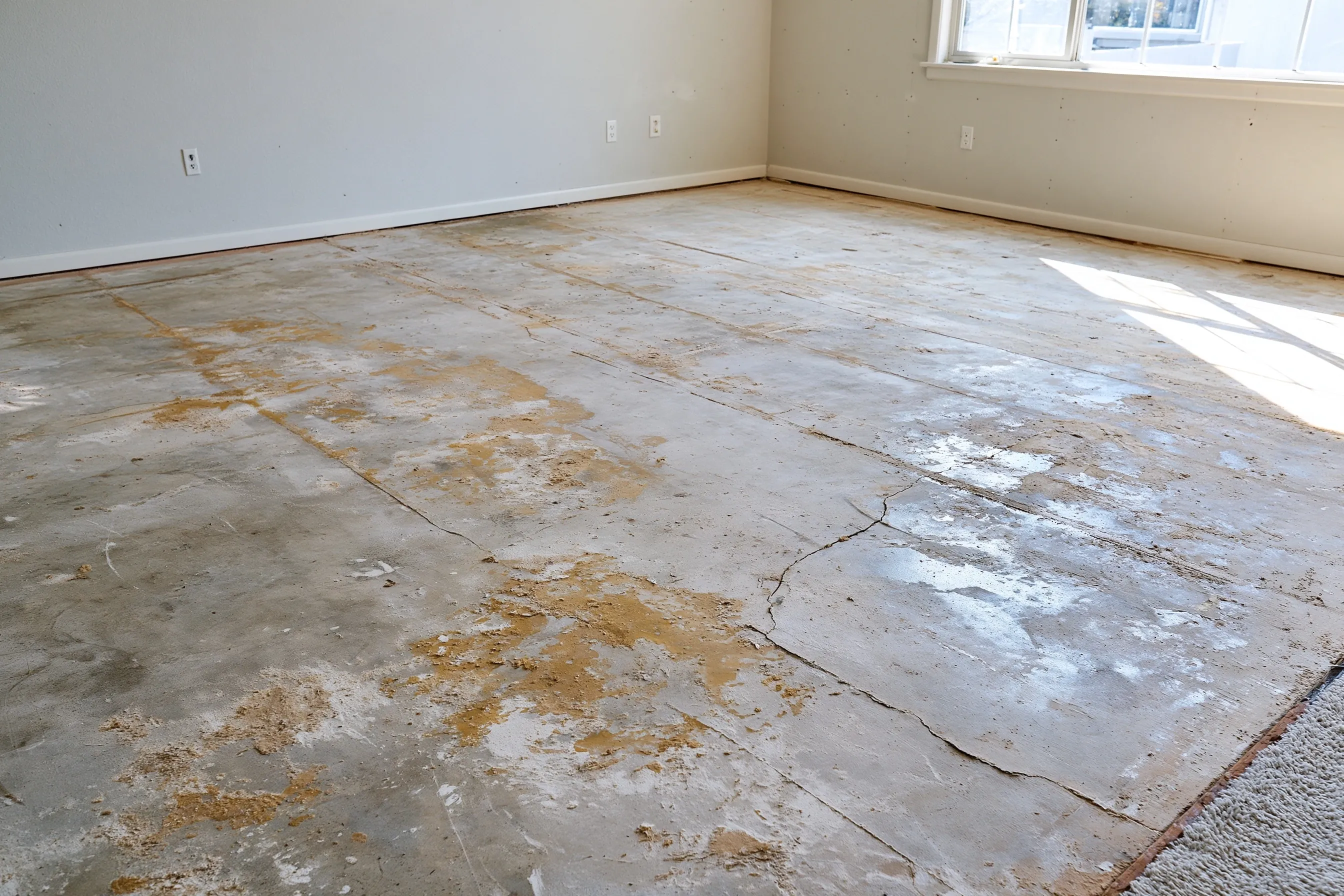
Carpet and its tack strip are pulled first. Glued carpet and vinyl leave a layer of adhesive behind, and that has to be ground away because it gums up tooling and can show through a finish.
Ceramic or stone tile is removed and the thinset beneath it ground off. Leftover ridges and low spots are part of what the slab shows afterward.
Coatings, paint and old sealers are ground off or removed another way. We test the floor first, since what is on it decides how it is removed.
Older tile and black mastic can contain asbestos, so have them tested before anything is ground. Maricopa County’s asbestos handbook draws a line: a parcel that is owner-occupied residential with four or fewer dwelling units is not a facility under its rules, while a residential building used or ever used for commercial, institutional or industrial purposes is. The handbook adds that resilient flooring that will be ground can become regulated material and that mastic can break up into loose dust under power tools.
This is not legal advice. Check the county’s handbook or the Maricopa County Air Quality Department for your situation.
Control joints are cuts made so the slab cracks along a straight line instead of anywhere; they do not stop cracking. On a polished floor, joints, cracks and patches stay visible, and joints are usually filled. A hairline crack can be filled but not erased. A crack that keeps widening or a floor that has dropped is a question for an engineer, and engineering is not something we do.
Once the covering is off, the slab may show damp marks, patched trenches, saw cuts, trowel marks and soft spots. A surface that is too soft can fall short of the hardness polishing needs, and we tell you before polishing starts. A polish does not level a floor; it shows the level it has.
Removing glue and coatings raises dust. For walk-behind grinders, OSHA’s silica rule lists water fed continuously at the cutting surface or a manufacturer-recommended dust collector with a 99 percent filter, and in an enclosed room loose dust is vacuumed with a HEPA-filtered unit between passes.
Usually yes once it is exposed, if the surface is hard enough. A test area shows how the cracks, patches and joints will look.
It is ground off with diamond tooling. Thick or tacky adhesive takes more passes and can add to the cost.
No. Hairline cracks can be filled, but they and the joints stay visible after polishing.
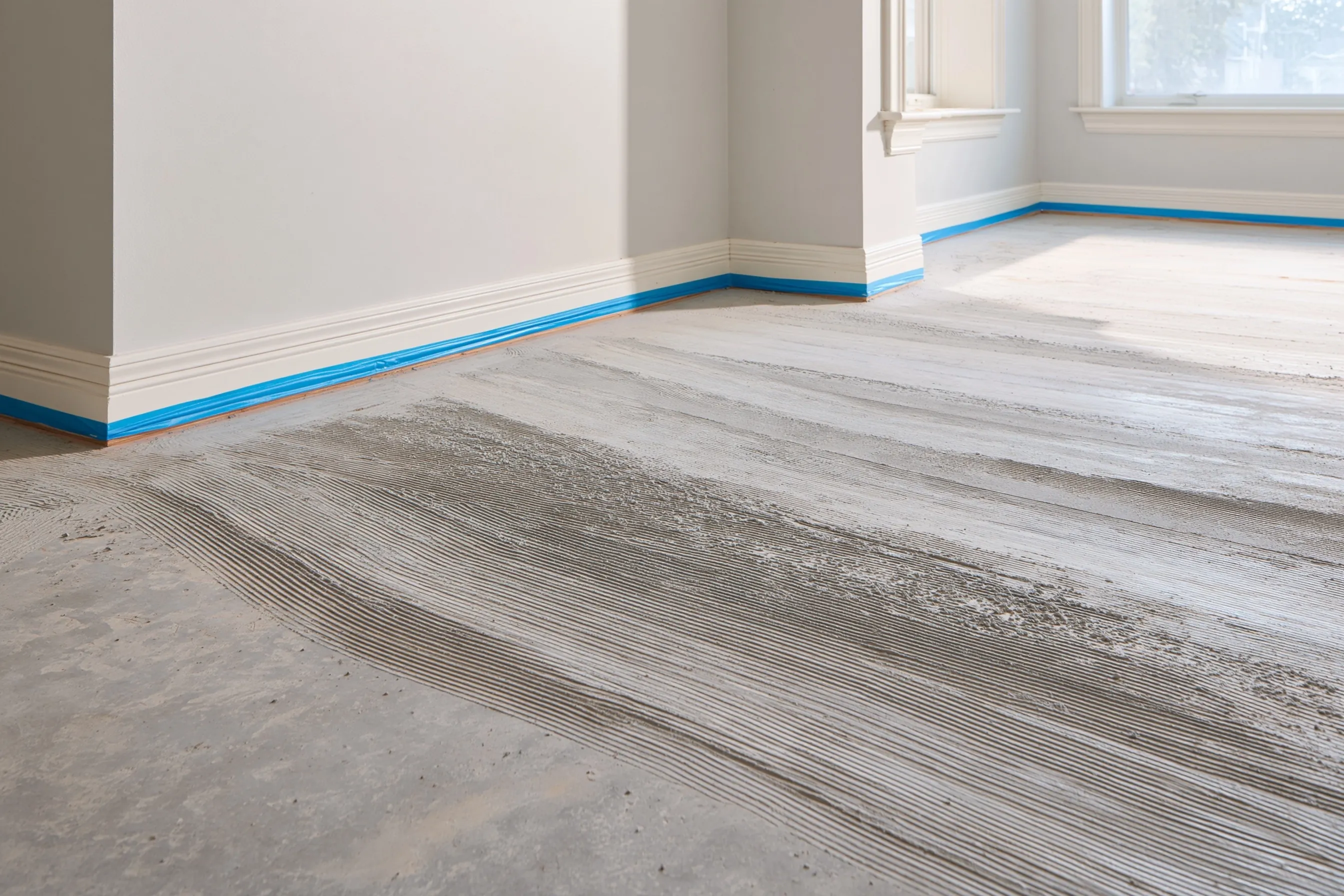
After the old floor is gone, the slab can take color (stained and dyed concrete floors), a ground-and-sealed look (grind and seal concrete floors) or a full polish, which our Avondale Polished Concrete home page explains.
Describe what covers the floor, the age of the building, and whether anyone has tested it for asbestos. Mention known cracks or damp patches. We'll get back to you soon with an estimate or any questions we have. Estimates are free and there's no obligation.
Call (844) 564-2599